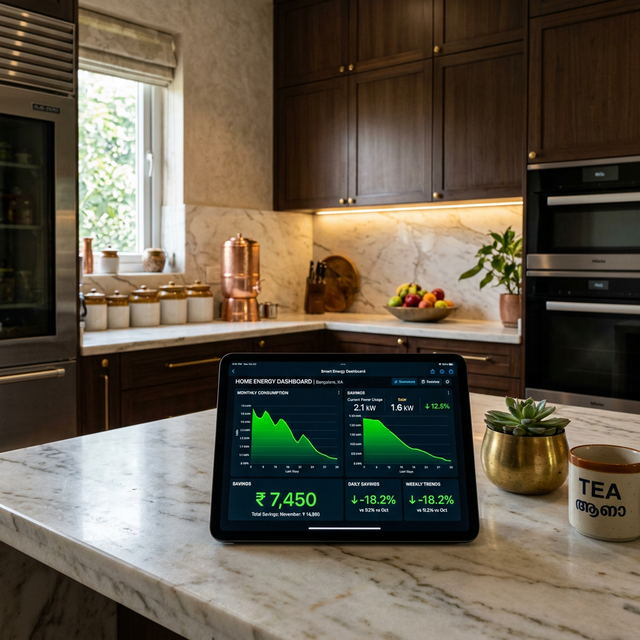
Bangalore electricity tariffs have increased by 23% over the past three years. For a large villa with active air conditioning, the monthly bill can reach ₹15,000–40,000. Smart home automation addresses this directly: not through deprivation (using less light and less AC) but through intelligence — ensuring energy is consumed only when and where it is needed, at the right intensity, for the right duration. Synchronos clients consistently report 25–40% reductions in electricity bills after full smart home implementation.
Where Does Your Electricity Go?
In a typical 4–5BHK Bangalore villa:
- Air conditioning: 45–55% of total electricity consumption
- Lighting: 15–20%
- Water heating: 10–15%
- Entertainment/AV equipment: 5–10%
- Kitchen appliances: 5–10%
Smart automation addresses all five categories through different mechanisms.
Smart Lighting: The Quick Win
Motion-activated lighting alone — lights that switch on when you enter a room and switch off 8 minutes after you leave — eliminates the ubiquitous problem of lights burning all day in unoccupied rooms. In a typical Bangalore home:
- Bathrooms: occupied 5–10% of the day but lit 60–80% of the day without automation
- Corridors and utility rooms: perpetually lit because nobody walks past to switch them off
- Exterior garden lighting: often left on overnight accidentally
Occupancy sensor + smart dimmers across all secondary spaces typically saves 20–30% of lighting electricity (8–12% of total home consumption). Combining with LED technology (if not already done) and daylight harvesting sensors provides further savings.
Smart Climate Control: The Major Impact
Air conditioning is the single largest electricity consumer in a Bangalore home. Smart automation dramatically reduces this through:
Scheduling
Pre-programme the AC to start 30 minutes before you wake, reach temperature by the time you're in the room, and switch off or elevate setpoint automatically when you leave the house. No more returning home to discover the AC has been running all day.
Occupancy-Based Control
Smart automation detects when a room is vacant (via motion sensors or presence detectors) and automatically adjusts or switches off the AC in that zone. In a 5BHK home where 3-4 rooms are typically unoccupied during the day, this generates significant savings.
Temperature Setpoint Optimisation
Every 1°C increase in AC setpoint from 24°C to 25°C saves approximately 6% on AC electricity consumption (BEE India data). Smart automation maintains the optimal comfort setpoint without unnecessary over-cooling.
Integration with Solar
For homes with solar rooftop panels, smart automation can schedule high-consumption activities (water heating, EV charging, dishwasher, laundry) to coincide with peak solar generation hours (10 AM–2 PM), maximising self-consumption and reducing grid import.
Water Heating (Geyser) Optimisation
A standard 25L geyser draws 2–3kW. Scheduling it to heat 20–30 minutes before use and cut off immediately after eliminates the significant standby loss from keeping water hot all day. Smart plugs or automation-controlled circuits achieve this with zero manual effort. Typical saving: ₹300–600/month.
Standby Power Elimination
Modern electronics draw 2–15W in standby — routers, TV, set-top boxes, gaming consoles, AV receivers, and chargers. Across a full home, standby consumption can total 150–300W continuously. Smart plugs and smart power strips (scheduled off for 10 PM–6 AM on entertainment systems) eliminate this wasted consumption.
Energy Monitoring
Most smart home automation platforms support whole-home energy monitoring through smart meters and sub-metering. synchronosliving.comtegrates energy monitoring dashboards that show:
- Real-time consumption by circuit or device
- Historical trends (daily, weekly, monthly)
- Anomaly alerts ("Your AC is running 40% more than usual — possible fault")
- Solar generation vs. consumption balance for solar homes
Visibility alone creates 5–10% consumption reduction — users modify behaviour when they can see the cost impact in real time.
Real-World Savings at synchronosliving.comstallations
- 4BHK villa, Jayanagar: Pre-installation bill ₹18,000/month. Post-installation (smart lighting + climate control + scheduling): ₹11,500/month. Saving: 36%.
- 3BHK apartment, Koramangala: Pre-installation: ₹7,200/month. Post: ₹5,100/month. Saving: 29%.
- Commercial office, 8,000 sq ft, Electronic City: Pre-installation: ₹95,000/month. Post (DALI lighting + BMS): ₹61,000/month. Saving: 36%.
FAQ
How long does it take to see energy savings after smart home installation?
Immediate for lighting scheduling. AC savings appear in the first full billing cycle (30 days). Full optimisation typically stabilises after 60–90 days as automation rules are refined based on actual occupancy patterns.
Is the energy saving enough to pay for the automation system?
At ₹30,000–50,000/year in energy savings (typical for a 4–5BHK villa), a mid-range smart home system pays back its energy-related costs in 3–6 years — independent of the convenience and security benefits.

