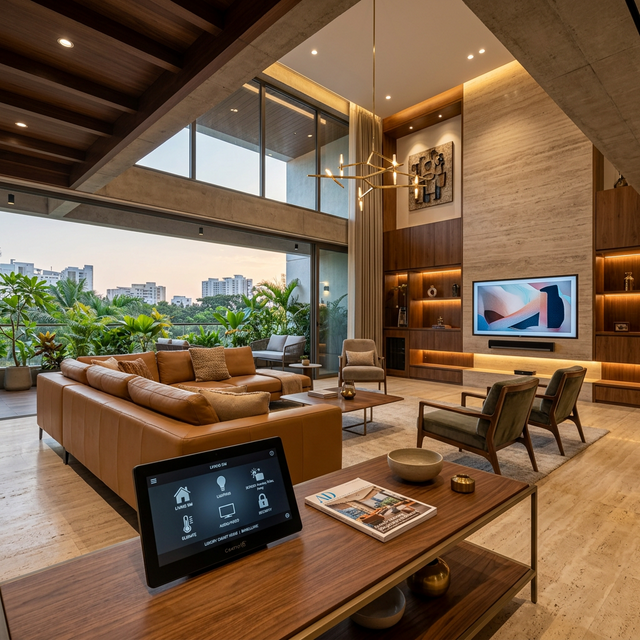
Bangalore has over 30 companies claiming to offer smart home automation. From well-established firms to one-man WhatsApp vendors, the quality spectrum is enormous. Choosing the wrong integrator can mean a half-working system, no after-sales support, and an expensive re-installation. This guide — from a 15-year veteran integrator — explains what differentiates genuinely capable companies from the rest, and provides a checklist of questions to ask before signing any contract.
The Smart Home Integrator Landscape in Bangalore
The Bangalore market loosely segments into:
- Premium turnkey integrators: Companies like Synchronos Solutions that handle interior design, automation, AV, acoustics, and security from a single accountability point. 15+ year track records, certified teams, proprietary methodologies.
- Specialist AV/automation companies: Focus specifically on smart home or AV, often with strong technical expertise in one area. May not coordinate construction or interiors.
- Consumer electronics retailers offering installation: Companies primarily selling branded products (KNX, Control4 hardware) from showrooms, with installation as a secondary service.
- Informal integrators: Individual technicians or small groups, often with competitive pricing but minimal after-sales capability, no formal certifications, and limited design expertise.
7 Criteria for Evaluating a Smart Home Integrator
1. Track Record and Portfolio
Ask for a portfolio of completed projects — especially projects similar to yours in size, scope, and technology. A genuine integrator will have photographs, client testimonials, and ideally the ability to arrange a reference visit to a completed installation. Synchronos Solutions has completed 4,000+ installations across South India — a portfolio we invite prospective clients to explore in detail.
2. Protocol Expertise
Do they know KNX as well as they know Control4? Are they truly platform-agnostic, or are they locked into reselling one manufacturer's products? A competent integrator can compare KNX vs. Control4 vs. Crestron objectively and recommend the best fit for your project rather than the product with the highest dealer margin.
3. In-House vs. Subcontracted Installation
Does the company install with its own certified technicians, or subcontract to third parties? Subcontracting is not inherently bad, but you should know who is actually entering your home and who stands behind the workmanship warranty.
4. Certifications and Partnerships
Look for:
- KNX Association certification (verifiable at the KNX Association website)
- Control4 Dealer certification (Gold, Platinum, or Diamond tier)
- Crestron certified programmer credentials
- Lutron certified dealer status
- Industry awards — Silicon India, etc.
Synchronos holds multiple brand partnerships and has been recognised as a Silicon India Top 10 Promising Home Automation Company.
5. Post-Installation Support
Smart home systems need occasional support — firmware updates, scene modifications, troubleshooting, and hardware replacements. Ask:
- What is the response time for support calls?
- Do they offer Annual Maintenance Contracts?
- Is remote diagnostics available?
- What happens if the company closes — will my system become unsupported?
Companies running on open protocols like KNX offer superior long-term security since the system can be supported by any KNX-certified company, not just the original installer.
6. Design Competency
Technology that is not beautifully integrated with the interior destroys the design intent. Does the company have interior design expertise to ensure switch positions, panel placements, speaker locations, and cable concealment all respect the aesthetic vision?
7. Single Point of Accountability
Managing an automation project with separate vendors for electrical, AV, CCTV, automation, and interiors creates significant coordination risk. Budget overruns, finger-pointing between vendors, and schedule delays are endemic. The best outcome — and the Synchronos model — is a single company responsible for every element of the project.
Red Flags to Watch Out For
- Extremely low quotes without detailed scope — "we'll figure it out as we go"
- No physical office or showroom in Bangalore
- Inability to provide references or show completed projects
- Only reselling one brand of equipment
- No formal service agreement or warranty documentation
- Pressure to pay large advance instalments before detailed design is agreed
Questions to Ask Before Hiring
- Can you show me a completed project similar to mine?
- Which automation protocol do you recommend for my home and why?
- Do your technicians hold KNX/Control4/Crestron certifications?
- What does your AMC cover and what does it cost?
- Who is my single point of contact throughout the project?
- How do you handle scope changes during installation?
- What warranty do you provide on workmanship?
Why Experience Matters in Smart Home Integration
Every home is different — wall construction materials, existing electrical infrastructure, network topology, family lifestyle patterns, and aesthetic preferences make every project unique. The difference between a company with 15 years and 4,000+ projects vs. one with 2 years and 50 projects is the accumulated ability to anticipate problems before they occur, resolve them efficiently when they do, and design systems that truly serve the client's lifestyle rather than just checking technical boxes.

